

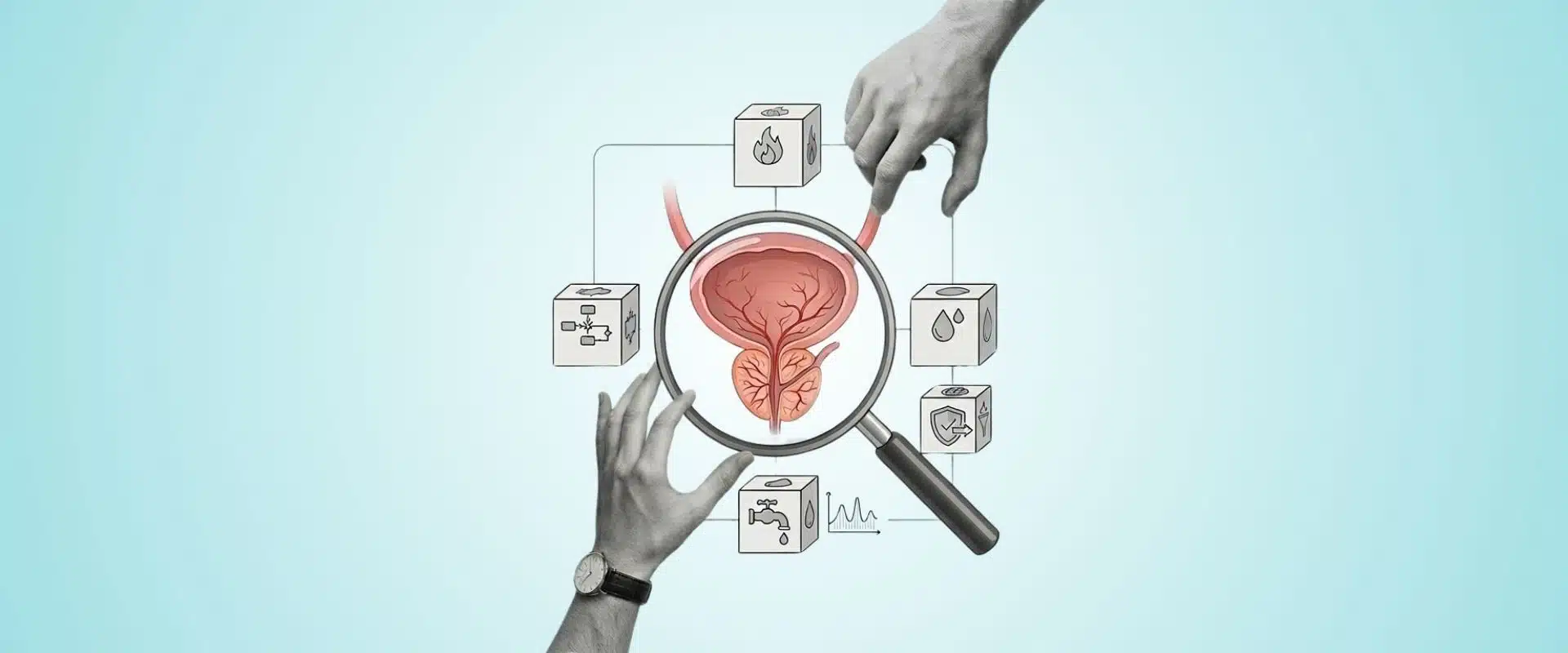
For many men, the prostate is something they do not think about until symptoms start interfering with daily life. That is usually when the frequent trips to the bathroom begin, the urine stream feels weaker, or there is discomfort that does not make sense. In practice, these issues are far more common than most people realise. Some are linked to inflammation and infection, some to an enlarged prostate, and some to more serious disease such as prostate cancer.
At Urologic Health Dubai, one thing becomes clear very quickly: many patients delay getting checked because they assume urinary symptoms are just part of age. That assumption is a mistake. While some prostate conditions are mild and manageable, others need prompt medical attention. The good news is that most prostate problems can be diagnosed early and treated effectively when they are taken seriously.
What is the prostate
The prostate is a small, walnut-shaped gland that is part of a man’s sex organs and the male reproductive system. It sits below the bladder, in front of the rectum, and surrounds the upper part of the urethra, which is the tube that carries urine out of the body. Because of this position, even small changes in the gland can affect urination.
The prostate works closely with the penis, scrotum, and testicles. Its main job is to make prostate fluid, which becomes part of semen. That fluid helps protect and transport sperm, supporting a man’s ability to father children. During sexual climax and ejaculation, the gland helps push this fluid into the urethra, where it mixes with sperm to form semen.
Anatomically, the prostate lies near the bladder neck, also called the neck of the bladder, where urine starts to drain. Because the gland surrounds the urethra, enlargement, swelling, or disease can compress the passage and affect the lower urinary tract. That is why prostate disorders often cause urination problems before anything else.
What are prostate diseases
The most common prostate diseases usually fall into three main groups:
- Prostatitis, which is inflammation or infection of the prostate
- Benign prostatic hyperplasia or BPH, which means a non-cancerous enlarged prostate
- Prostate cancer, where abnormal cells grow inside the gland
These conditions can overlap in symptoms, which is why guessing at home is a bad idea. A weak stream, pelvic pain, or trouble emptying the bladder can happen in more than one condition. The right diagnosis matters.
What causes prostate problems
Different prostate conditions have different causes.
Prostatitis may happen because of an infection, often from bacteria or other tiny organisms. In some men, it develops after a urinary tract infection, or UTI. In others, the exact cause is less clear. Doctors sometimes suspect the body’s response to prior infection, irritation from urine, nerve damage in the pelvic area, or ongoing muscle tension and stress. Chronic prostatitis can be especially frustrating because it may continue even when standard tests do not show obvious bacteria.
Benign prostatic hyperplasia, or BPH, is mostly linked to age and hormonal changes. As men get older, male-hormone levels shift. The prostate may develop extra tissue, and the gland can become thicker, stiffer, and larger over time. This is why benign prostatic hyperplasia is much more common in older men.
Prostate cancer develops when abnormal cells in the prostate begin growing in an uncontrolled way. The exact cause is not always clear, but risk goes up with age, family history, and certain inherited factors. Not every prostate growth is cancer, but ignoring symptoms or avoiding screening is how serious cases get missed.
Quick look at causes
| Prostate problem | Main causes or triggers | Typical pattern |
|---|---|---|
| Prostatitis | Bacteria, prior UTI, pelvic tension, nerve issues, immune response | Can be sudden or long-term |
| BPH / enlarged prostate | Aging, hormone changes, prostate tissue growth | Usually develops gradually |
| Prostate cancer | Abnormal cell growth, family history, older age | May be silent early on |
Who develops prostate problems and how common are they
A prostate problem can affect men at different stages of life, but the type often changes with age.
Prostatitis is common in younger and middle-aged men, though it can affect all ages. It is one of the leading prostate conditions seen in men under age 50. Some cases are caused by bacterial prostatitis, while others are linked to pelvic pain syndromes, emotional stress, or nerve damage in the lower urinary tract area.
BPH is mainly a problem of getting older. It is rare before age 40, becomes more common after age 50, and its frequency increases steadily with age. Many older men develop some degree of prostate enlargement, even if they do not all develop bothersome symptoms.
Prostate cancer is far more likely in men over 50, especially if there is a family history. That does not mean younger men are immune, but the numbers rise sharply with age.
Who is more likely to develop prostate diseases
| Condition | More likely in | Key risk factors |
|---|---|---|
| Prostatitis | Younger to middle-aged men | UTI, infection, stress, catheter use, pelvic injury |
| BPH | Older men | Aging, family history, obesity, diabetes, low activity |
| Prostate cancer | Men over 50 | Family history, age, some ethnic risk factors |
What are the symptoms of prostate problems
The symptoms depend on the type of prostate disorder, but many revolve around urination and pelvic discomfort.
Some men notice a delay when trying to start urination. Others feel they cannot stop and start normally, or that they need the bathroom more frequently. There may be an urgent rush to the bathroom, passing only a little urine, or leakage and dribbling. A weak urine stream is one of the most recognised warning signs, especially in BPH.
With chronic prostatitis, long-lasting pain or discomfort may show up in the penis, scrotum, the area between the scrotum and anus, the lower belly, or the lower back. Some men also report pain during urination or ejaculation.
Bacterial prostatitis can come on quickly with fever, chills, body aches, and pain. In more gradual or chronic cases, symptoms may build slowly and last a long time.
Some men with enlarged prostate wake up at night to urinate, sometimes multiple times, which affects sleep and quality of life. Others feel they never empty the bladder completely.
Be alert for unusual urine colour, strange smell, pain while urinating, pain with ejaculation, blood in urine or semen, and inability to urinate. Those are not symptoms to ignore.
Common symptoms by condition
| Symptom | Prostatitis | BPH / enlarged prostate | Prostate cancer |
|---|---|---|---|
| Pain or burning on urination | Common | Less common | Possible |
| Frequent urination | Common | Very common | Possible |
| Weak urine stream | Possible | Very common | Possible |
| Fever and chills | More likely in bacterial cases | No | Rare |
| Pelvic or lower back pain | Common | Less common | Possible |
| Blood in urine or semen | Possible | Possible | Possible |
Do prostate problems cause other problems
Yes, and this is where a lot of men get caught off guard.
A prostate problem does not just stay in one place. It can affect sex, sleep, energy, confidence, and bladder health. Ongoing urinary blockage can lead to UTI, bladder stones, and in severe untreated cases, pressure can build up enough to harm the kidneys. When urine cannot drain properly, it may back up, increasing pressure on the bladder and potentially the kidneys. In worst-case situations, that can lead to kidney damage or even kidney failure.
Chronic pain from prostatitis can also affect mood, concentration, and sexual function. Long-term inflammation in the prostate and surrounding areas can make daily life miserable even when the condition is not life-threatening.
How does my doctor know if I have a prostate problem
Diagnosis starts with your doctor taking a proper medical history, symptoms review, and family history. Then comes a physical exam, often including a digital rectal exam, where the doctor checks the prostate through the rectum to assess size, shape, tenderness, or suspicious changes.
After that, testing depends on the symptoms and what the doctor suspects.
A urine test checks for blood, signs of infection, or other abnormalities. A blood test may include PSA, or prostate-specific antigen, a protein made by the prostate. A high PSA does not automatically mean prostate cancer, but it does mean more assessment may be needed.
Doctors may also use urodynamic tests to see how the bladder and urethra hold and release urine. If blockage is suspected, this helps show whether prostate enlargement is causing poor flow.
A cystoscopy uses a thin cystoscope to look inside the urethra and bladder. Ultrasound can help assess prostate size, bladder emptying, and nearby structures. In some cases, a transducer may be placed through the rectum for clearer prostate images.
If cancer is suspected, a prostate biopsy may be recommended. That involves taking small tissue samples from the prostate and sending them to a lab, where a specially trained doctor examines them for signs of disease or cancer.
Tests commonly used for diagnosis
| Test | What it helps show |
|---|---|
| Urine test | Infection, blood, urinary abnormalities |
| Blood test / PSA | Prostate activity, possible cancer warning signs |
| Digital rectal exam | Size, tenderness, shape, hard areas |
| Ultrasound | Size, structure, bladder emptying |
| Cystoscopy | Blockage inside urethra or bladder |
| Biopsy | Confirms or rules out prostate cancer |
How do doctors treat prostate problems
Treatment depends entirely on the type of prostate disease. Anyone promising one universal fix is selling nonsense.
For chronic prostatitis, treatment often focuses on reducing pain, discomfort, and inflammation. Doctors may prescribe an alpha-blocker to relax muscles around the prostate and the part of the bladder nearby. Common examples include tamsulosin and silodosin. Warm baths, relaxation exercises, pelvic physical therapy, and pain management strategies may also help.
For bacterial prostatitis, antibiotics are the main treatment because the goal is to kill the bacteria and clear the infection. Some patients also need changes in diet, better hydration, and follow-up to ensure the infection has actually cleared.
For BPH, there are several routes. If symptoms are mild, watchful waiting and lifestyle changes may be enough. That can include drinking fewer liquids before bed, reducing caffeine and alcohol, avoiding certain cold and allergy medicines, and reviewing timing of diuretics if the patient uses them.
When symptoms are more bothersome, medicines may be prescribed. Some relax prostate and bladder muscles, such as tamsulosin, doxazosin, or tadalafil. Others, like finasteride or dutasteride, help slow prostate growth and may shrink the gland over time.
If symptoms are severe or getting worse, surgery or minimally invasive procedures may be recommended. These aim to shrink or remove prostate tissue that is blocking urine flow. Common approaches include transurethral procedures such as TURP, laser therapies, and other targeted interventions. In selected cases, men go home the same day.
For prostate cancer, treatment depends on stage, aggressiveness, age, general health, and patient goals. Options may include surveillance, surgery, radiation therapy, hormone treatment, or combinations of these.
Treatment overview
| Condition | Common treatments |
|---|---|
| Prostatitis | Antibiotics, alpha-blockers, pain relief, warm baths, pelvic therapy |
| BPH / benign prostatic hyperplasia | Lifestyle changes, medication, minimally invasive treatment, surgery |
| Prostate cancer | Monitoring, surgery, radiation, hormone therapy, specialist care |
What are the side effects of treatments for prostate problems
Every treatment has trade-offs, and patients deserve honesty about that.
Medicines for prostatitis or BPH can cause dizziness, tiredness, stomach upset, low blood pressure, or ejaculation changes. If a medication makes a patient feel sick or uncomfortable, the doctor should know right away.
Surgery for BPH can temporarily affect bladder control or sexual function. Some men recover normal sexual ability within months, while others need longer. The exact recovery depends on the procedure and the individual’s overall health.
Treatments for prostate cancer may carry more significant side effects, especially depending on whether surgery, radiation, or hormone therapy is used. Issues can include erectile dysfunction, urinary leakage, bowel changes, fatigue, or hormonal symptoms.
The point is simple: the best treatment is not the flashiest one. It is the one that fits the diagnosis, the severity, and the patient’s priorities.
How can I prevent a prostate problem
There is no guaranteed way to prevent every prostate disease, but there are smart ways to reduce risk and catch problems earlier.
Men with family history, urinary symptoms, or increasing age should speak to a doctor about regular prostate checks. Recognising lower urinary tract symptoms early can reduce long-term effects and prevent complications.
Staying physically active, managing weight, controlling diabetes and blood pressure, and avoiding delay in treating urinary infections are sensible steps. Prevention is not always about stopping the disease from ever forming. Often it is about catching it early before it starts causing damage.
Eating diet and nutrition
Diet is not magic, but pretending it does not matter is lazy thinking.
Researchers continue to study whether eating patterns affect prostate health. What seems clear is that a balanced diet supports overall urinary and metabolic health, which matters for men with BPH, prostatitis, and cancer risk concerns.
A practical approach is to eat more vegetables, fibre, healthy fats, nuts, berries, tomatoes, and whole foods while reducing excess processed food, sugar, alcohol, and too much caffeine. Men with urinary symptoms often notice that caffeine and alcohol make urgency and frequency worse.
Diet habits that may help
| Helpful habits | Habits that may worsen symptoms |
|---|---|
| More vegetables and fibre | Excess caffeine |
| Good hydration through the day | Heavy evening fluid intake |
| Healthy weight control | High processed food intake |
| Mediterranean-style eating | Excess alcohol |
What is benign prostatic hyperplasia
Benign prostatic hyperplasia is the medical term for a non-cancerous enlargement of the prostate. BPH happens when the gland grows in size and starts pressing on the urethra. Because the prostate sits just below the bladder and wraps around part of the urethra, that growth can interfere with the normal passage of urine and semen.
It is important to understand this clearly: BPH is not cancer. But the symptoms can overlap with more serious conditions, so men should not assume an enlarged prostate is harmless without assessment.
Does having benign prostatic hyperplasia increase the risk of prostate cancer
Current evidence does not show that BPH directly increases the risk of developing prostate cancer. They are different conditions. However, they can exist at the same time, and they can cause similar symptoms. That is why proper screening matters.
Who does benign prostatic hyperplasia affect
BPH mainly affects males and people with a prostate as they grow older. The older the patient, the more likely some prostate enlargement is present.
How common is benign prostatic hyperplasia
It is extremely common. By around age 60, many men have signs of benign prostatic hyperplasia, and by age 85, the numbers rise even higher. Not all will need treatment, but many will experience symptoms at some point.
What are the warning signs of benign prostatic hyperplasia
Warning signs include slow urination, dribbling, difficulty starting, urgency, getting up at night to pee, incomplete bladder emptying, and sometimes pain with peeing or ejaculation. These symptoms usually develop gradually.
What happens if you leave an enlarged prostate untreated
Leaving an enlarged prostate untreated can lead to worsening blockage, recurrent infection, bladder stones, blood in the urine, and kidney strain. In bad cases, it can damage the bladder and kidneys.
What causes benign prostatic hyperplasia
The exact cause is not fully settled, but hormone changes with aging appear to be central. Testosterone patterns shift, while other hormones and growth signals can continue stimulating prostate cells. DHT, a potent form of testosterone, is also strongly linked to prostate growth.
How is benign prostatic hyperplasia treated
Treatment for BPH starts with symptom severity. Mild cases may only need monitoring. More bothersome cases may need medication. Severe or resistant cases may need procedures such as TURP, laser treatment, UroLift, Rezūm, or other interventions chosen by the urologist based on prostate size and patient goals.
What is the best treatment for benign prostatic hyperplasia
There is no one best treatment for every patient. For some, medication works well. For others, minimally invasive therapy offers a better balance of relief and recovery. For large glands or heavy obstruction, surgery may provide the strongest long-term result.
What is the difference between prostate cancer and benign prostatic hyperplasia
The difference is simple but critical.
Benign prostatic hyperplasia is non-cancerous growth of prostate tissue. Prostate cancer involves abnormal cells that may grow aggressively and, in some cases, spread to bones, lymph nodes, or other parts of the body.
Both can cause weak flow, frequent urination, and nighttime bathroom trips. That is why symptoms alone are not enough to separate them.
Overview prostatitis
Prostatitis is a condition involving swelling, irritation, and inflammation of the prostate gland. It can be painful, disruptive, and surprisingly stubborn. Some cases are clearly bacterial, while others are not linked to active infection.
The prostate is roughly the size of a walnut and sits below the bladder, surrounding the top part of the urethra. When it becomes inflamed, urination, ejaculation, and pelvic comfort can all be affected.
Types prostatitis
There are four main types:
- Acute bacterial prostatitis
- Chronic bacterial prostatitis
- Chronic prostatitis or chronic pelvic pain syndrome
- Asymptomatic inflammatory prostatitis
Acute bacterial cases tend to start suddenly and feel intense. Chronic forms often linger, recur, or cause repeated discomfort without a clean, obvious cause.
Symptoms of prostatitis
Symptoms may include pain or burning while urinating, trouble starting the stream, frequent urination especially at night, pelvic pain, pain in the belly, groin, penis, or testicles, painful ejaculation, and sometimes fever, chills, or flu-like symptoms.
Causes prostatitis
The cause depends on the type. Bacteria can trigger acute and chronic bacterial cases. Chronic pelvic pain forms may involve earlier infection, nervous system changes, immune activity, stress, hormone issues, or pelvic muscle dysfunction.
Risk factors prostatitis
Risk goes up with earlier prostatitis, urinary infection, catheter use, pelvic surgery or injury, and chronic stress. Younger and middle-aged men are commonly affected.
Complications prostatitis
Complications can include bacteremia, epididymitis, prostate abscess, chronic pelvic pain, sexual dysfunction, and significant stress. While research continues, long-term irritation of the prostate remains an area of ongoing study in relation to cancer risk.
What is prostate cancer
Prostate cancer is one of the most important prostate diseases because it can be silent in the early stages. Some prostate cancers grow slowly and may never become dangerous. Others are aggressive and need rapid treatment.
This is exactly why men should stop pretending that no symptoms means no problem. Early-stage prostate cancer may not cause noticeable signs at all.
Symptoms of prostate cancer
Symptoms can include urinary problems, blood in urine or semen, pelvic discomfort, erectile dysfunction, and pain in the back, hips, or ribs if disease has spread. But again, many men have no obvious symptoms early on.
How are prostate diseases diagnosed
Prostate diseases are diagnosed through a combination of medical history, physical exam, DRE, blood and urine testing, imaging, and sometimes biopsy. The choice of tests depends on whether the doctor suspects infection, BPH, or prostate cancer.
When should I see my healthcare provider
See a doctor promptly if you have:
- Trouble urinating
- Blood in urine
- Fever with urinary pain
- Pelvic or genital pain
- Weak stream that keeps worsening
- Recurrent nighttime urination
- Burning, urgency, or a feeling that the bladder does not empty
And if you cannot urinate at all, that is an emergency.
Final thoughts
The biggest mistake men make with prostate problems is waiting too long and hoping symptoms will sort themselves out. They often do not. Whether the issue is prostatitis, benign prostatic hyperplasia, BPH, an enlarged prostate, or concern about prostate cancer, early evaluation matters.
At Urologic Health Dubai, the goal is not just to treat a gland. It is to protect urinary function, comfort, sleep, sexual health, and long-term wellbeing. If symptoms are affecting daily life, get assessed properly. Guessing is cheap. Delay is expensive.