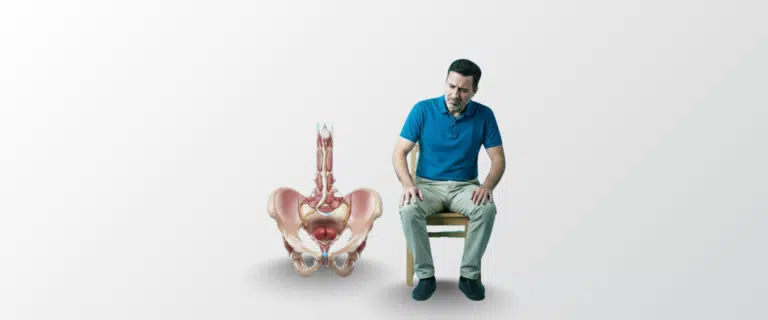


When men search for prostatitis symptoms, they are usually already uncomfortable. I have seen this many times in clinic. A patient walks in describing burning urination, pelvic discomfort, fever, or a dull ache that just will not go away. Many assume it is a simple UTI. Sometimes it is. Often, it is more complicated.
At Urologic Health Dubai, we approach prostatitis with one goal: get the diagnosis right the first time. Because treatment depends entirely on the type.
Let’s break this down clearly.
Understanding Prostatitis and Prostate Infection
Prostatitis refers to inflammation of the prostate gland. That inflammation may be caused by a prostate infection, or it may occur without bacteria. The difference matters.
There are four main categories:
| Type | Cause | Typical Pattern |
|---|---|---|
| Acute bacterial prostatitis | Sudden bacterial infection | Severe symptoms, fever |
| Chronic bacterial prostatitis | Persistent bacteria | Recurrent urinary infections |
| Chronic pelvic pain syndrome | Often non-bacterial | Long-lasting pelvic pain |
| Asymptomatic inflammatory | No symptoms | Found incidentally |
When patients report urinary pain, pelvic discomfort, and fever, I immediately consider acute bacterial prostatitis. When symptoms linger for months, I evaluate for chronic prostatitis.
Common Prostatitis Symptoms
The most frequent symptoms include:
- Burning during urination
- Pelvic or perineal pain
- Urinary urgency
- Difficulty starting urine
- Fever in severe cases
- Painful ejaculation
In severe infection, body temperature may exceed 101.1°F or 38.4°C. That changes management completely.
How We Diagnose Prostatitis
Diagnosis starts with careful listening. History often gives more information than any machine.
1. Physical Exam
A healthcare provider performs a focused physical exam, including a Digital rectal exam. During this exam, the provider inserts a gloved, lubricated finger into the rectum to assess the prostate gland.
We check for:
- Tenderness
- Swelling
- Enlargement
In acute bacterial prostatitis, the gland is extremely tender. In chronic cases, findings may be subtle.
We avoid aggressive prostate massage in acute cases because it can trigger bacteremia.
2. Urine Testing
The foundation of diagnosis is Urinalysis.
We perform:
- Standard urinalysis
- Urine culture
- Microscopic evaluation for bacteria
- Screening for UTIs
A positive culture helps determine the type of infection and identify the responsible bacteria. Laboratory results guide antibiotic sensitivity pattern selection.
In recurrent cases, we may use the Meares-Stamey four glass test or a simpler two-glass test, comparing pre-massage and post-massage urine samples.
3. Blood Tests
A Blood test may include:
| Test | Purpose |
|---|---|
| Complete blood count | Check white blood cell count |
| Basic metabolic panel | Assess kidney function |
| PSA | Evaluate inflammation impact |
In acute infection, white blood cell count may rise significantly. PSA levels can increase temporarily due to inflammation. About 70% of patients may have spurious PSA elevation. If PSA remains elevated more than two months after treatment, we evaluate for malignancy.
Inflammatory markers like C-reactive protein may be elevated but have minimal diagnostic utility alone.
4. Imaging Studies
Imaging studies are typically unnecessary during initial evaluation. However, if a patient remains febrile beyond 36 hours despite adequate antibiotic therapy, we investigate further.
Options include:
- Transrectal ultrasound
- CT scan
- MRI of the pelvis
These help rule out a prostatic abscess.
5. Specialized Testing
In selected cases, we may perform:
- Cystoscopy to evaluate the urinary tract
- Urodynamic testing to assess bladder and nerve function
- DNA amplification testing for sexually transmitted infections such as Chlamydia trachomatis or Neisseria gonorrhoeae
We avoid prostate biopsy during active infection to prevent septicemia.
Treatment
Treatment depends entirely on the type and severity.
Acute Bacterial Prostatitis
This is a medical urgency.
Most patients receive oral antibiotics for 14 to 30 days. Severe cases require hospitalization and intravenous broad-spectrum therapy.
Admission criteria include:
- Systemically ill appearance
- Inability to tolerate oral intake
- Urinary retention
- High risk of antibiotic resistance
If urinary obstruction occurs, catheterization or cystostomy may be necessary.
Most febrile patients improve within 36 hours of starting therapy.
Chronic Bacterial Prostatitis
More challenging. Treatment typically lasts four to six weeks, sometimes longer. Fluoroquinolones remain effective but resistance is increasing.
In recurrent cases, low-dose suppressive antibiotic therapy may be considered.
Repeat urine cultures one week after completing therapy ensure bacterial clearance.
Chronic Pelvic Pain Syndrome
Not always caused by infection.
Management includes:
- Anti-inflammatory medications
- Alpha-blockers
- Pelvic floor physical therapy
- Psychological support if needed
I have found that patients improve when treatment addresses both physical and psychological components. Ignoring stress and anxiety reduces success.
Home Care and Supportive Measures
Simple steps help recovery:
- Warm sitz baths
- Hydration
- Avoid caffeine and alcohol
- Use donut-shaped cushion
- Avoid bike riding during flare-ups
These measures reduce pressure and irritation.
Prevention
Preventing future episodes involves:
- Prompt treatment of UTIs
- Safe sexual practices
- Avoid unnecessary catheterization
- Antibiotic prophylaxis before prostate biopsy
Antibiotic resistance is a growing concern. Tailored therapy is critical.
Possible Complications
If untreated, complications may include:
| Complication | Risk |
|---|---|
| Prostatic abscess | Around 2 to 3% |
| Recurrence | About 13% |
| Chronic prostatitis | 1 in 9 cases |
| Sepsis | Rare but serious |
Prostatitis is not cancer. However, inflammation may temporarily raise PSA levels.
Final Thoughts from Clinical Practice
In my experience, the biggest mistake is delayed evaluation. Many men tolerate urinary pain for weeks before seeing a healthcare provider. By that time, infection may have progressed.
Early diagnosis leads to faster recovery. The right tests, targeted antibiotics, and structured follow-up make the difference.
If you are experiencing persistent prostatitis symptoms, especially fever or severe pain, seek evaluation immediately.
At Urologic Health Dubai, precision in diagnosis is our priority. Treatment works when the type is correctly identified.